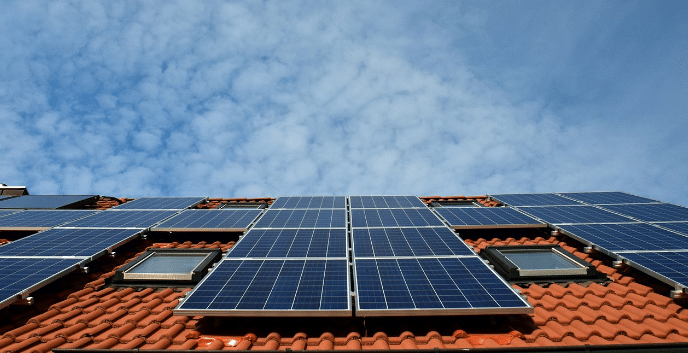
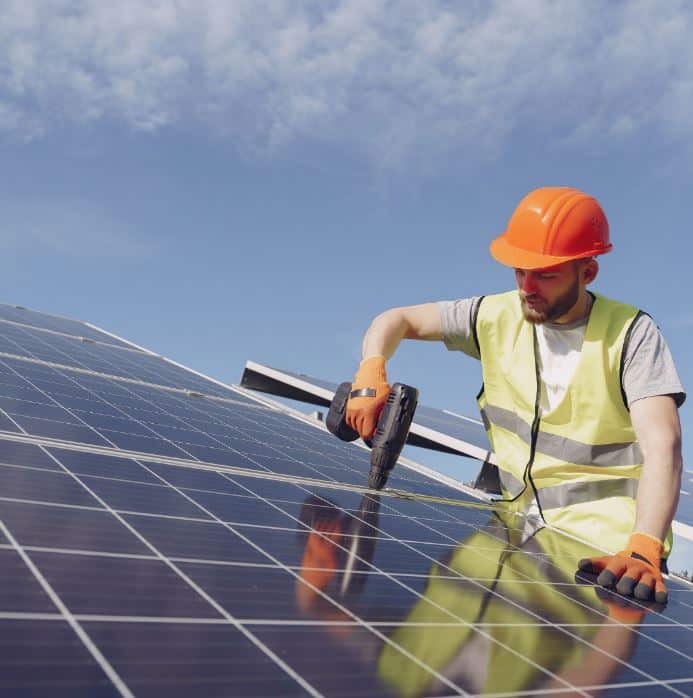
The disadvantage of buying an older home often lies in the fact that there is still much to be done to make it more energy-efficient. Take into account the costs for insulation and installing solar panels if you, for example, are buying a home with an energy label of C or worse.
The energy label indicates how energy-efficient a home is. The most energy-efficient homes have the A++++ label, and the least energy-efficient homes have the G label. As a homeowner, you would prefer to choose a home with the best energy label, because energy is expensive and is likely to become even more expensive in the future. You can also go about greening your own home yourself.
How much does insulating a house cost?
The cost of retrofitting depends on many factors. For example, it makes a big difference whether you have a detached house or a terraced house. For an apartment house, you pay €1,500 for cavity wall insulation, whereas for a detached house you pay more than double that amount. To insulate the roof, you can keep the costs low by doing it yourself, but that isn’t always possible. If you have this done, the costs start at around €3,000. For floor insulation, there are too many variables to be able to assign a specific amount to it.
Installing HR++ glass
Installing good insulating glass can also make a big difference in energy consumption. It can save you hundreds of euros per year. However, you must consider an investment of at least €4,000. Choosing triple glazing is even more sustainable, but may also have a major disadvantage. The frames must be suitable for triple glazing. If they are not, the investment will be much higher.
Solar panels have become much cheaper
A few years ago there were long waiting lists for installing solar panels. That is no longer the case. Compared to a few years ago, solar panels have also become cheaper. You can now have ten solar panels installed including installation for an amount of approximately €5,000 to €7,500.
The government is contributing
Through the National Agency for Entrepreneurial Netherlands (RVO) You can apply for a subsidy. The amount of the subsidy you receive depends on the sustainability measure. Please read carefully about this investment subsidy for sustainable energy and energy savings (ISDE) before you start implementing the measures. There are, of course, some rules and conditions associated with this subsidy. You will receive the subsidy after the sustainability measures have been implemented.
Additional mortgage
Buying a home with an energy label E, F or G entitles you to an additional mortgage of up to €20,000. For homes with the energy label C and D, you can borrow an additional €15,000. However, you must use the additional amount entirely to make the home more energy efficient. You must also be able to demonstrate this.